
An allergen is a foreign substance that one has an allergic reaction to. Allergens come from outside of the body: you can breathe them in, touch them, or eat them. Some examples of allergens are foods, mold, pollen, dander, etc. There are two major phases to an allergic reaction. The first phase, initial exposure, also called sensitization, corresponds to the first time (or first few times) your body encounters an allergen. The second phase, subsequent exposure, refers to encounters with the allergen that elicit an allergic reaction like itchy eyes, runny nose, etc.
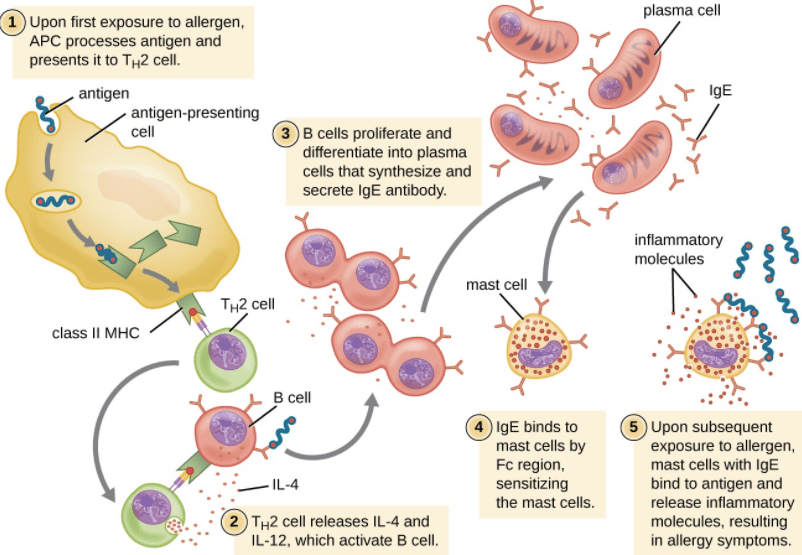
First Exposure To The Allergen
Sensitization starts with a person breathing in pollen (or some other allergen) for the first time. The allergen gets picked up by an immune cell called a dendritic cell along the membranes of the airways, which grab the pollen and travel to the lymph nodes. The lymph nodes are where important immune cells like T and B cells are located. T cells in the lymph nodes bind to the dendritic cell carrying the pollen and became activated, transforming into what we call a Th2 cell.
T-cells are immune cells that can only bind a single given antigen–there is a T cell for every foreign substance your body could possibly encounter. In an allergic response, activated Th2 cells trigger B-cells to activate and produce pollen-binding antibodies which worsen the allergic response. Th2 cells also drive accumulation of eosinophils and mast cells in the airways, priming the area for further allergic responses. A subset of T and B-cells also become memory cells, so the body can recognize this pollen quicker with subsequent exposure. Antibodies against this pollen start circulating throughout the body in the bloodstream by day 14 post-exposure, and remain in circulation for weeks or months.
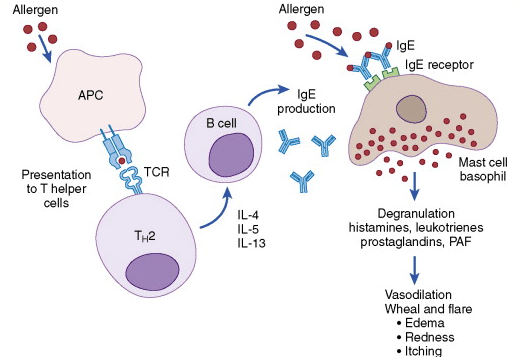
Subsequent Exposure
Now you’ve breathed in pollen again! Your immune system remembers this allergen. Mast cells bind to the pollen and release chemicals such as histamine. Histamines have multiple effects in the body, including inducing difficulty breathing, causing the blood vessels to dilate and fluid to leak out of the blood vessel walls, swelling, hives, and mucous secretion.
After this first wave of symptoms, more immune cells accumulate and release chemicals in the airway even though the pollen might be gone. Smaller molecules called leukotrienes begin to damage the thin tissue in the airways. Eventually, the symptoms will die down as immune cells will no longer get signaled to go to the airways.
Some of the mild symptoms of an airway allergic reaction are hives, eczema, nose inflammation, and asthma. Some of the more severe symptoms (usually caused by a large amount of an allergen) are increased blood vessel permeability and airway constriction, which makes the body unable to supply enough oxygen to vital organs.

Definitions
Antibodies: A blood protein that counteracts a specific antigen. Antibodies combine chemically with substances that the body recognizes as foreign.
Eosinophils: A type of infection-fighting white blood cell.
Granulocytes: a white blood cell that contains secretory granules (tiny sacs that contain various enzymes, compounds, and other components that are used to defend against pathogens, reduce inflammation and destroy cells) in its cytoplasm, i.e. a neutrophil, basophil, or eosinophil
Lymph node: Lymph nodes filter substances that travel through the lymphatic fluid, and they contain lymphocytes (white blood cells) that help the body fight infection and disease
Mast cells: Allergy cells responsible for immediate allergic reactions. They cause allergic symptoms by releasing mediators stored inside of them or made by themMediator: compounds that are either locally released or carried in blood or tissue fluids and that help initiate, perpetuate, or aggravate a pathological process
 Airway And Skin Allergies